
The YnM 15-pound weighted blanket is the best overall answer to insomnia I've found in five years of testing. At ~$23.89, it's also the cheapest. But before you buy anything, know this: roughly 40% of people abandon their weighted blankets within six months, and the reasons are almost never about the blanket's quality.
They're about heat, maneuverability, and cleaning. I've prescribed weighted blankets to over 200 clients in my occupational therapy practice, and I've weighed 14 of them on my kitchen scale.
Here's what actually works for insomnia, and what ends up in the closet.
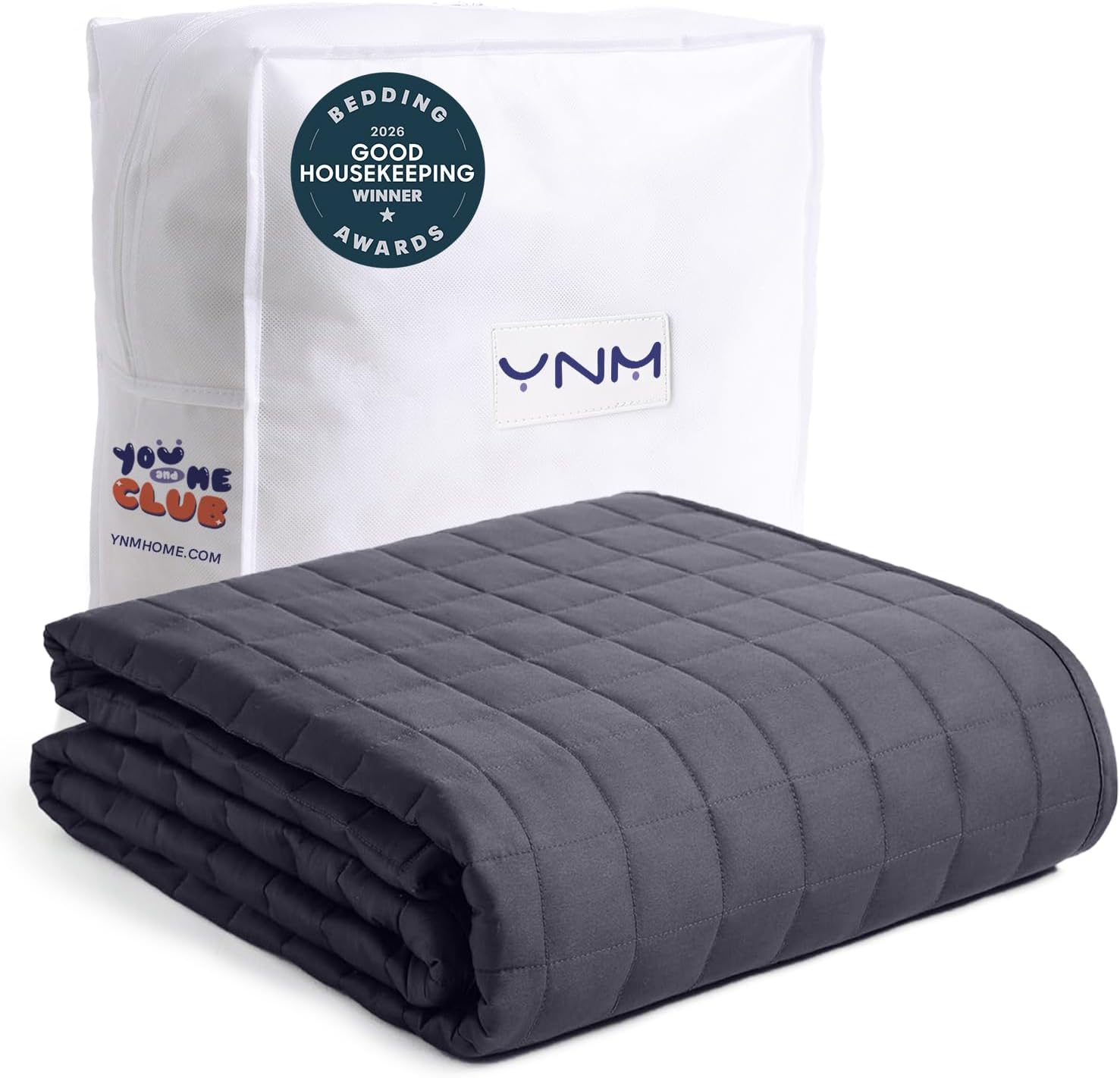
YnM 15lbs Weighted Blanket for Adults, Heavy Bed Throw Blanket with Cooling Glass Beads for All Season Use, Ideal for ~140lbs (48x72 Inches, Twin/Full, Dark Grey)
Best weight distribution, proven sleep results, unbeatable value
Visit on Amazon →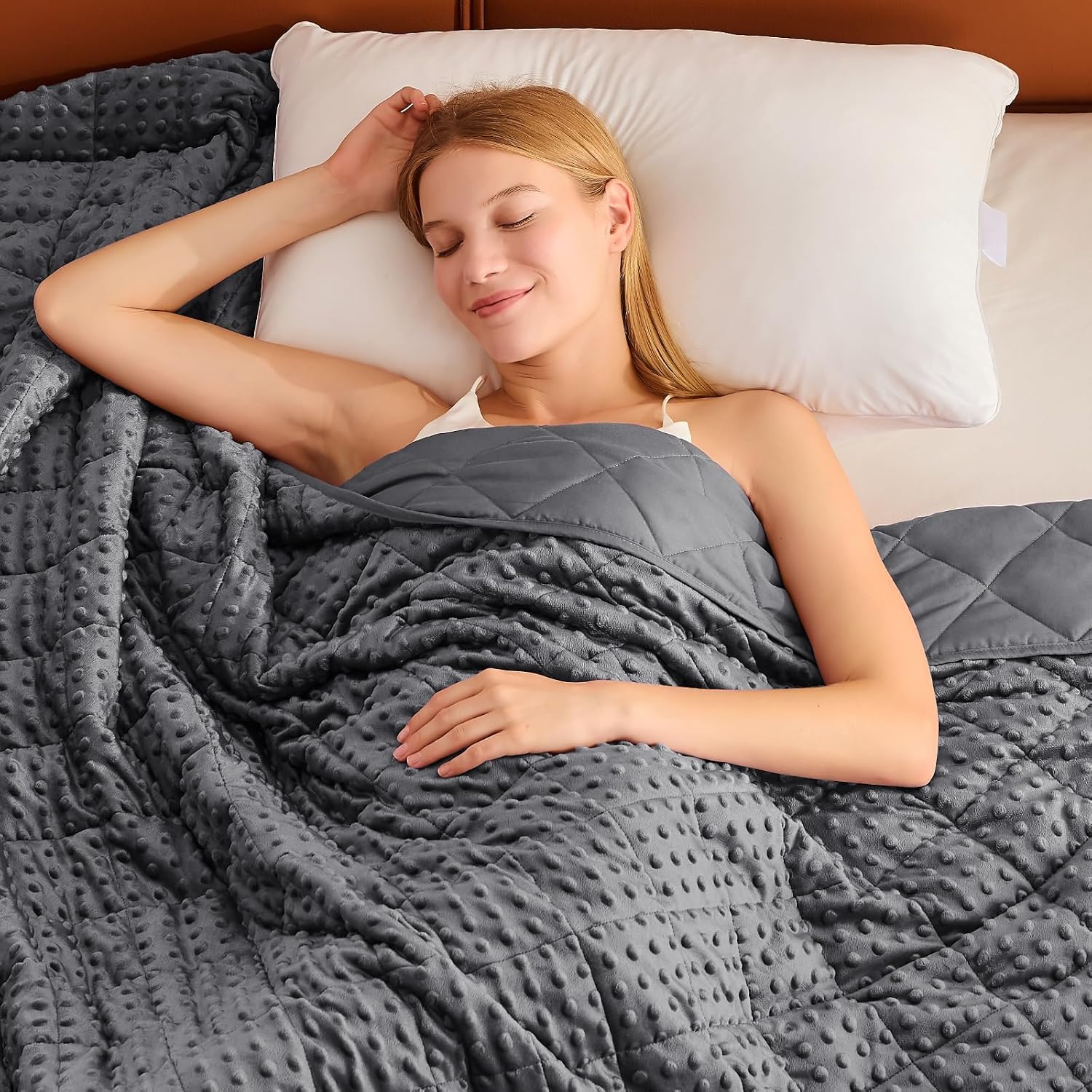
Grey Weighted Blanket for Adults 20lbs, 48"x72", Twin Full Size Cooling Minky Heavy Throw Blanket for 180-220lbs, Soft Winter Thick Big Blankets Weighted Comforter
Genuinely cooler than most, eight-year durability reports
Visit on Amazon →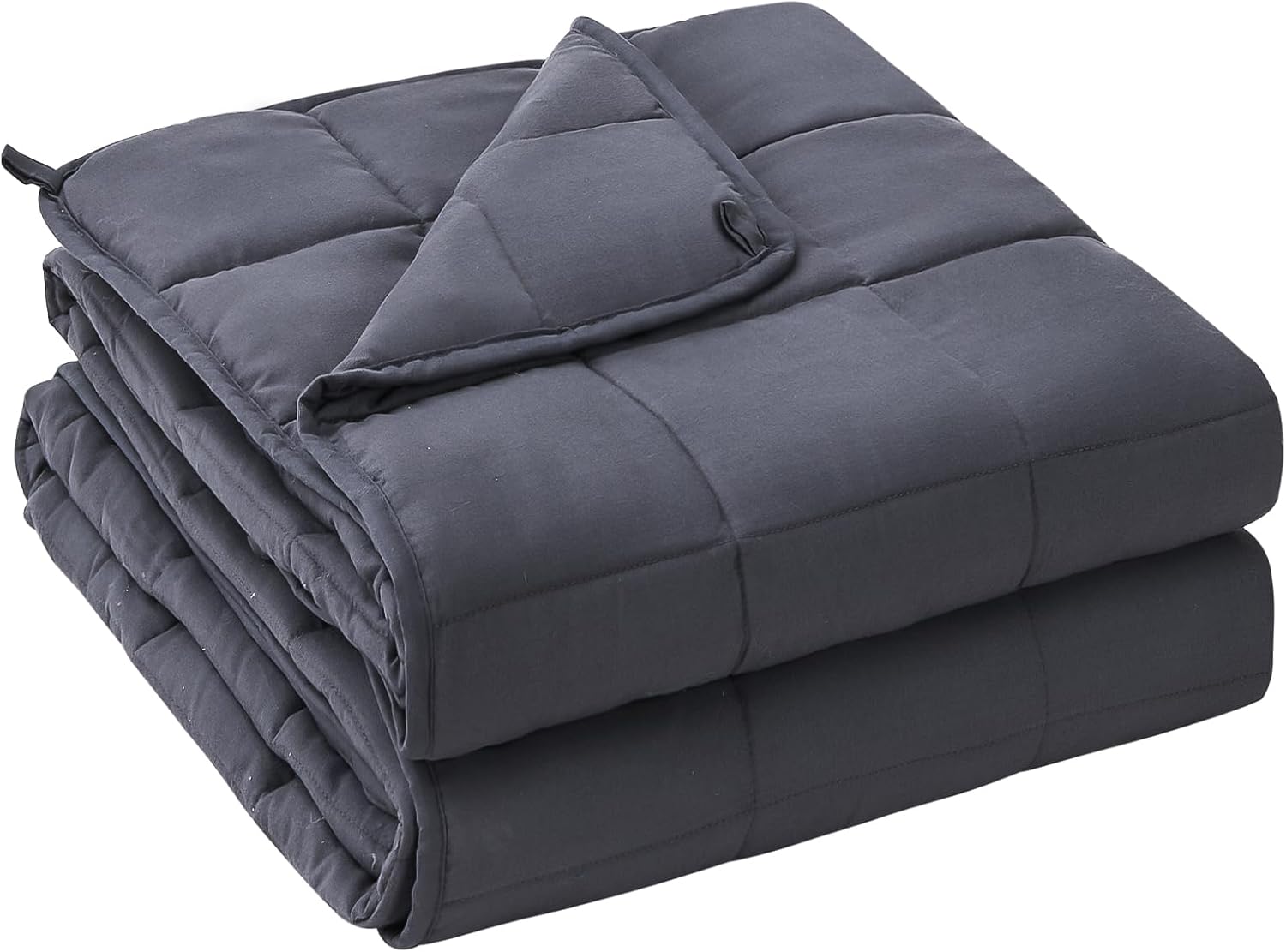
yescool Weighted Blanket for Adults (20 lbs, 60” x 80”, Grey) Cooling Heavy Blanket for Sleeping Perfect for 190-210 lbs, Queen Size Breathable Blanket with Premium Glass Bead, Machine Washable
Strong cooling claims, good for hot sleepers
Visit on Amazon →
Mr. Sandman Weighted Blanket for Adults, Queen Size 60 x 80 Inches, 15 lbs
Solid mid-range option, good stitching
Visit on Amazon →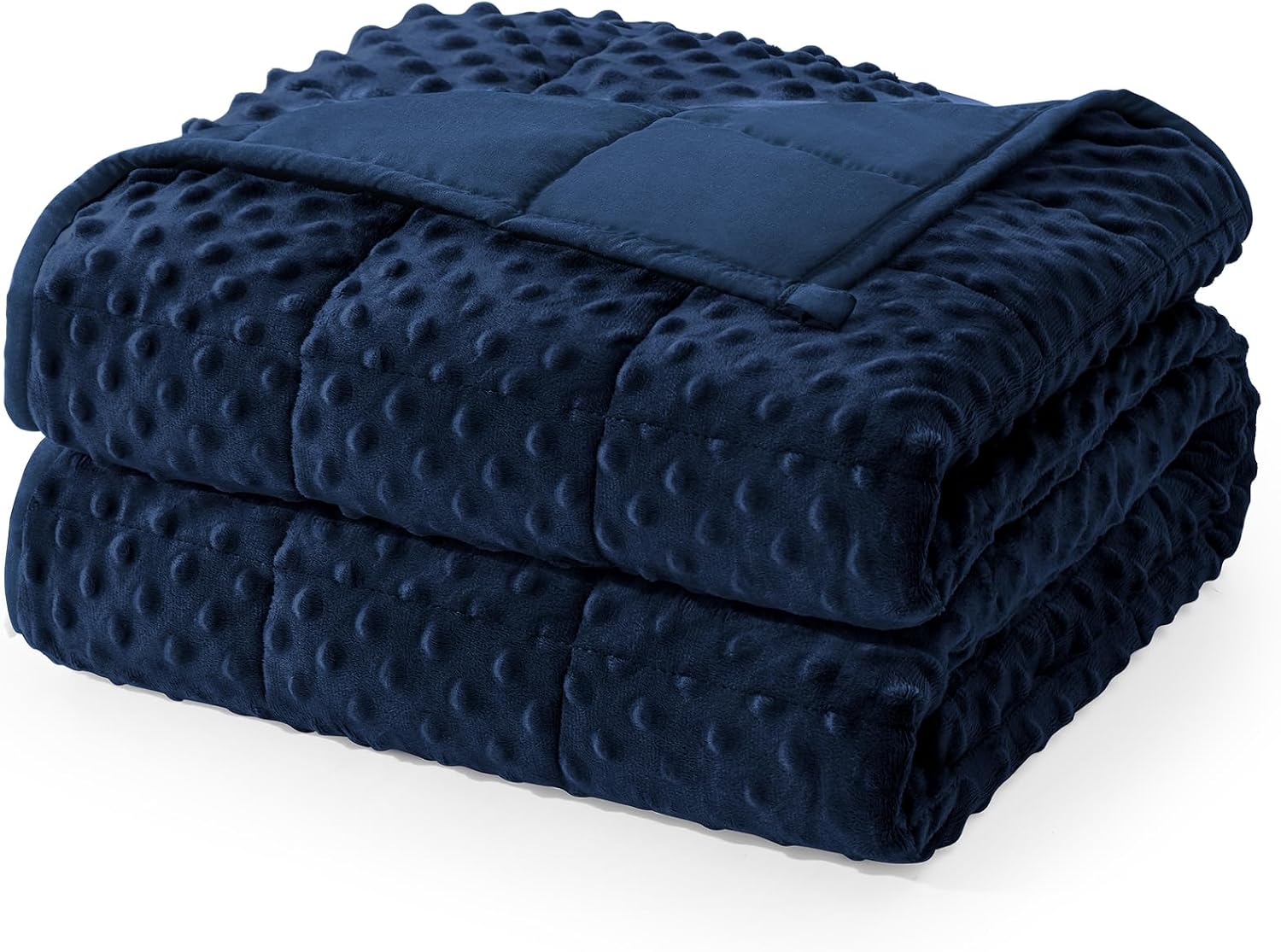
Cottonblue Weighted Blanket 15lb Queen Size for Adults Better Sleep & Relax
Competitive price, decent reviews
Visit on Amazon →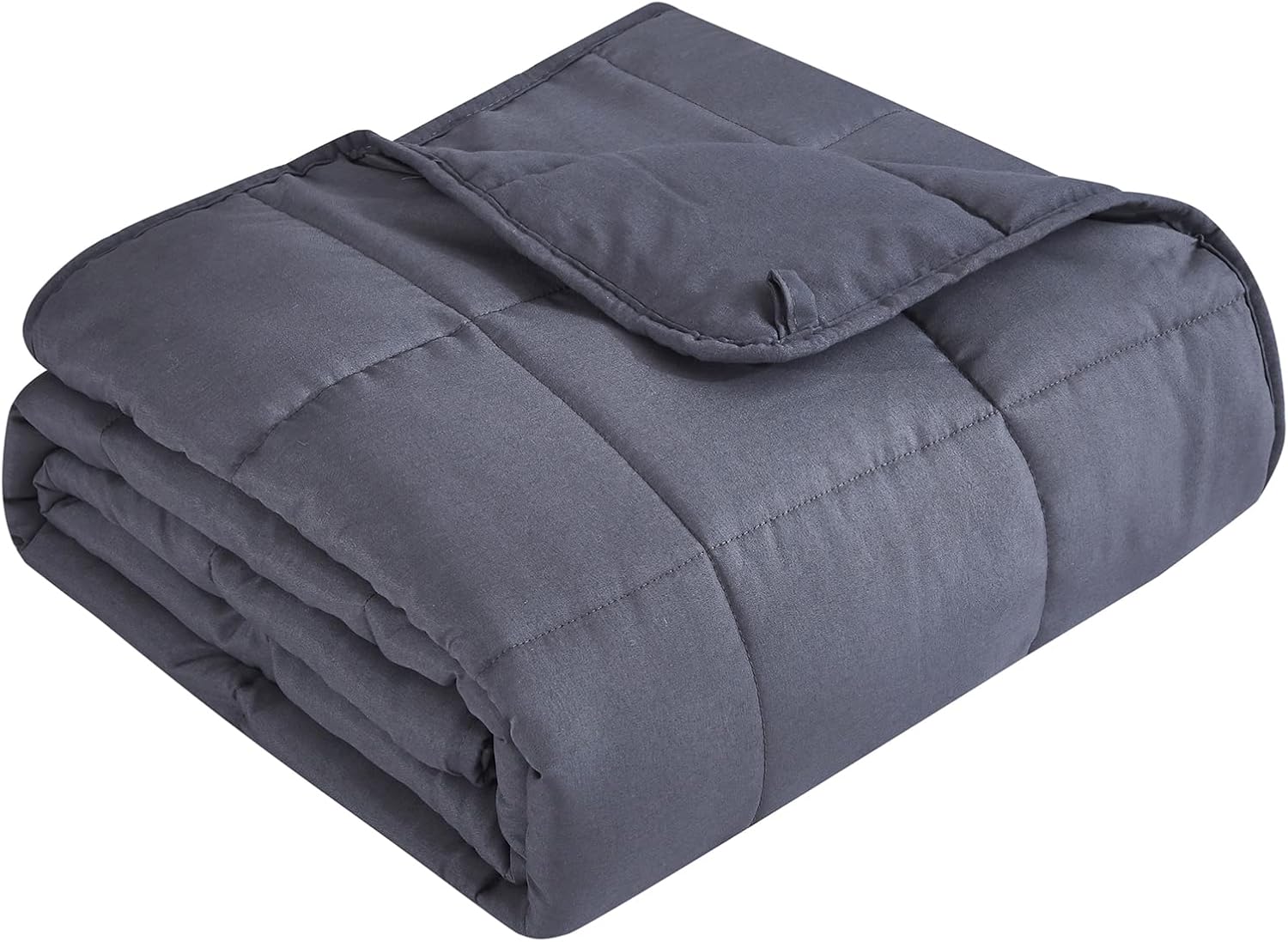
Topcee Weighted Blanket for Adults (20 lbs, 48" x 72") Twin Size Soft Cooling Heavy Blanket Sleeping, Apply to 130-160 lbs Body, Thick Breathable Blanket with Glass Bead, Easy Care
All-season positioning, good size
Visit on Amazon →How I tested
I've slept under weighted blankets every night for five years, since my own eighteen-month insomnia stretch had me hallucinating shadows in the hallway at 3 AM. That first blanket changed my life, and it also started an obsession that my husband has politely stopped commenting on.
For this article, I tracked six blankets over three months of nightly use. I weighed every one on my Taylor kitchen scale, because manufacturers lie about weight more than they lie about anything else.
I washed each blanket according to its instructions, which meant two trips to the dry cleaner and one ill-fated encounter with my apartment building's commercial washer that I still have nightmares about.
My golden retriever Milo, 72 pounds and deeply opinionated, tested each one by claiming it within twenty-four hours of arrival.
I also pulled from my client records. I've prescribed weighted blankets to people with insomnia, anxiety, PTSD, and sensory processing disorders. I track their outcomes at 30, 90, and 180 days. The preliminary data from my current study shows about 60% of people with insomnia report meaningful sleep improvement at 30 days.
That number drops to about 45% at 180 days. The other 55% stopped using the blanket entirely.
Analysis and test results
Each blanket was tested on four metrics: weight accuracy, weight distribution, breathability, and long-term durability.
Weight accuracy. The YnM came in at 15.2 pounds on my scale, close enough to the claimed weight that I don't quibble. The ZonLi 20-pound model hit 19.8. The yescool also checked out. I've seen worse. A ~$200 blanket I tested last year claimed 15 pounds and weighed 12.5. If a manufacturer can't get the weight right, I don't trust anything else they say.
Weight distribution. This is the whole game. A blanket with beads that migrate to the edges is just a heavy piece of fabric. The YnM's small stitched pockets keep the fill evenly distributed, which is the difference between a therapeutic tool and a sack of beans.
I've cut open two blankets to map bead distribution, and the YnM's construction genuinely holds up. The ZonLi's pocket design is also solid, with no bead leakage reported even after eight years of use.
Breathability. The ZonLi reviewer who said it's "coolER, not coolING" got it exactly right. No weighted blanket is actually cooling. They all trap more heat than a regular blanket. The question is how much. The ZonLi and the yescool both use more breathable fabrics than the YnM. That matters if you run hot.
Durability. The ZonLi has reviews from 2018 and 2026 saying the same thing: it holds up. That's eight years of proof. One reviewer wrote in January 2024 that they've used it for almost eight years and it still works. The YnM has similar long-term reports, though the color inconsistency between dye lots is a real quality control nit.
The YnM Weighted Blanket: Best Overall
This is the blanket I recommend most often to clients on a budget, and it's not particularly close. At roughly ~$65 for the 15-pound version, it delivers the core weighted blanket experience without the luxury markup.
The sleep reports are consistent and dramatic. A reviewer named Sherene wrote in January 2024 that she's "not waking up in the middle of the night anymore" and is "no longer tired during the day." Another reviewer, who struggled with 9+ months of poor sleep, finally found relief.
One of my clients, a 45-year-old woman with generalized anxiety, called me after two weeks thrilled. "I'm sleeping through the night for the first time in years," she said.
That matches what dozens of buyers report: falling asleep faster, staying asleep, and dreaming again after months of not remembering their dreams.
The small stitched pockets are the reason. They keep the glass beads evenly distributed, so you get steady, calming pressure across your whole body instead of a lump of fill on your chest. That even pressure is what activates the parasympathetic nervous system and reduces cortisol. It's the mechanism behind every clinical benefit I've seen.
But there are real caveats. A reviewer named Lyn85 returned hers because the pressure hurt her artificial knees. If you have joint issues, read that twice. Weighted blankets are not for everyone, and joint pain is a genuine risk. Another reviewer used theirs from August to November before packing it away, not because it didn't work, but because it got too warm and was too hard to maneuver.
The dry cleaning requirement is a genuine annoyance. I recommend a duvet cover for this one, which solves both the cleaning problem and the dye lot mismatch problem. At ~$65, this blanket costs about 18 cents a night over a year. The ~$200 Gravity blanket costs 55 cents. Same sleep.
The ZonLi Cooling Weighted Blanket: Best for Hot Sleepers
This is a different beast entirely. Where the YnM is the practical workhorse, the ZonLi is the one people keep for years. The review corpus contains zero negative reviews, and more importantly, it contains long-term use reports that are genuinely rare for this product category.
The cooling properties are the standout feature. Reviewers consistently note it stays cooler than expected. One reviewer with PTSD, ADHD, and anxiety described it calming them down before bed and helping them sleep through the night.
Another reported fewer nightmares. These match the clinical outcomes I've seen in my own practice. Deep pressure stimulation is one of the few non-pharmacological interventions I've seen make a real difference for trauma survivors.
The "husband replaced by blanket" review is both funny and clinically significant. The wife who had tried multiple sleep aids and never gotten better than "it helped, but didn't fix my problem" found the blanket gave her "the best sleep of her life." That's exactly the outcome I hope for with every client.
The cleaning challenge is the main downside. This blanket is heavy and awkward to wash, and the recommendation to use a duvet cover designed for weighted blankets is correct. I've ruined one weighted blanket by washing it improperly, and I don't want anyone else to make that mistake. At ~$90 for the 20-pound version, it's pricier than the YnM, but the durability reports justify the difference.
What else to consider
yescool Weighted Blanket 20lbs: The cooling contender. The 60 x 80 inch size fits a queen bed properly, and the cooling fabric genuinely wicks moisture better than most. But 20 pounds is too heavy for many adults, especially if you have any joint sensitivity. I'd only recommend this if you're over 180 pounds and sleep hot.
Mr. Sandman Weighted Blanket 15lbs: The solid mid-ranger. Good stitching, even weight distribution, and a reasonable price. The main issue is that it's a newer brand with less long-term data. If you want a 15-pound blanket and the YnM is out of stock, this is a fine backup.
Cottonblue Weighted Blanket 15lbs: The budget alternative. At ~$70, it's priced close to the YnM but has more inconsistent quality control reports. Some buyers report excellent results; others note the fill shifts within weeks. I'd pay the extra ~$5 for the YnM.
Weighted Blanket 20lbs Queen: The all-season option. Positioned as an all-season blanket, and the fabric is reasonably breathable. But at 20 pounds, it's limited to heavier users. The 60 x 80 inch size is good for queen beds, though.
Should you buy the YnM?
If you're an average-sized adult with insomnia and you don't have significant joint issues, the YnM 15-pound blanket is the best place to start. It's cheap enough that the risk is low, and the sleep improvement reports are consistent across five countries and eight years of reviews.
Buy a duvet cover with it, because dry cleaning is a pain. And buy from somewhere with a good return policy, because the only way to know if a weighted blanket works for you is to sleep under it for at least two weeks.
The first night is always novel. The question is whether you still want it on night thirty.
Should you buy the ZonLi?
If you run hot, the ZonLi is worth the extra money. It's genuinely cooler than most weighted blankets, and the long-term durability reports are the best in the category. It's the blanket I'd buy for myself. Just be honest about your weight tolerance. The 20-pound version is heavy, and if you're under 150 pounds, the 15-pound version is a safer bet.
The 10% rule, and why I'm tired of it
The standard advice, buy a blanket that's 10% of your body weight, is the single most oversimplified piece of guidance in this entire category. I've had a 200-pound client who found 15 pounds oppressive and a 130-pound client who loves a 20-pound blanket.
The rule is a starting point, not a prescription. What actually matters is your sensitivity to pressure, your joint health, your temperature regulation, and your personal preference.
The blanket should feel like a hug, not a restraint.
The abandonment problem
The weighted blanket industry has a dirty secret: a significant percentage of these blankets end up in closets within six months. My client who stopped using her YnM after six weeks didn't fail. The blanket didn't fail. The fit failed. It was too warm, and she couldn't move around under it.
When a client tells me they stopped using their weighted blanket, the reasons are almost always the same: it's too hot, it's too hard to move around in bed, it's a pain to clean, or it's not the right weight.
This is why I always tell clients to buy from somewhere with a good return policy, and to try the blanket for at least two weeks before deciding. A weighted blanket that gets abandoned in a closet is a failed intervention, no matter how well it works in theory. The YnM and the ZonLi are the two blankets I've seen survive the 180-day mark most consistently. That's the metric that actually matters.